Camouflage Clothing in Nature, Military, Recreation, Hunting and Fashion
Camouflage has been clothing for nature since the beginning of time
by Sharon Nani
Camouflage Surrounds Us
Camouflage Clothing in Nature
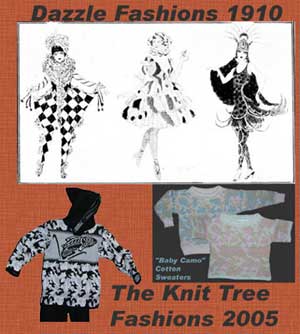
Camouflage Fashions from 1910 and 2005
Camouflage has been clothing for nature since the beginning of time. It comes to no surpise that man has taken advantage of this natural phenomenon for camouflage clothing in the military, recreation, and fashion
Camouflage has been clothing for nature since the beginning of time. Animals, reptiles, insects, birds, and even plants are known to disguise themselves to hide and protect them from their enemies. One of my favorite examples of a bird with camouflage clothing is the Willow Ptarmigan who lives in a tundra habitat of Alaska. This Grouse actually changes colors according to the season. In the winter, it is snow white except for its black tail. In the summer, the female is mottled with barred brown except for its white wings. Spring and fall have a variety of checkered patterns. Take a look at how this camouflage clothing for nature helps this bird blend into its seasonal surroundings.
New observations are always being made at the wonders of camouflage clothing for nature. Here’s a great example of a news story published recently titled “Two-limbed tiptoe aids octopus camouflage” by Narelle Towie. There is even a video so you can see how the octopus can camouflage itself as it moves on two of its arms!
Camouflage Clothing in Military
It comes to no surprise that man has taken advantage of this natural phenomenon in several aspects of his life. The French are actually credited with introducing the word ‘camoufler’ which means ‘to disquise’ at the beginning of World War I. There is no more important reason to use camouflage techniques then to protect our soldiers in the military or disquise them and their equipment from their enemies. Several influences from art and fashion helped in developing camouflage applications during World War I.
The art style cubism which was developed between 1908 and 1912 by collaboration between Pablo Picasso and George Braque influenced the clothing fashions of the time. Camouflage clothing can be traced all the way back to this era in these paintings of Razzle Fashions. This in turn inspired the first use of camouflage as a concealment for our military ships during World War I. This camouflage scheme was call Dazzle Painting by the British and Razzle Dazzle by the Americans. It incorporated a method of concealing the ship by breaking up its lines. This made it difficult for the U-boat captains to determine the ship’s course. A fellow classmate and friend of mine, Jim Richter and his wife, Jamie have written a great article on the history of Razzle Dazzle with numerous pictures of the World War I Ships applying this method of concealment. Visit their site to find out more.
Just like the Willow Ptarmigan , who changes its camouflage clothing for the season, military camouflage clothing was developed for disguising our soldiers in all kinds of environments. Military camouflage clothing was developed for forest camouflage, desert camouflage, marine camouflage, urban camouflage ,woodland camouflage and various versions of these camouflage clothing patterns.
The development of digital camouflage around 1970’s has played a big part in the camouflage pattern developments. Lieutenant Colonel Timothy R. O’Neill (U.S. Army, Retired) and West Point professor of engineering psychology can be called the father of digital camouflage with the development of Dual-Tex.Read about it here.
Next, it is documented that beginning in 1988 Canada developed their digital camouflage patterns : Woodland and Arid colors called CADPAT which is a registered trademark of the Canadian Government. After this MARPAT which is a registered trademark of the U. S. Marine Corps came out with their Forest, Desert, and Urban camouflage patterns.See pictures and more information
It is amazing to me to read about the scientific research and testing that was done in developing our military camouflage clothing. If you are interested in this topic Hypersetealth.com is a wealth of information on this subject.
Camouflage Clothing in Recreation and Fashion
Hunters, fisherman, and paintball hobbiests all enjoy wearing camouflage clothing to disguise themselves as well. The hunters and fisherman like their versions of forest camouflage, woodland camouflage, and desert camouflage dependant upon the season and environment that they are in. If they want to catch their game, they want the advantage of camouflage clothing. Fortunately, for them Recreational (civilian) Digital Camouflage patterns have been developed for licensing to manufacturers by the same man, Guy Cramer, who develops patterns for the military.
It is very much in fashion for the entire family to wear camouflage clothing. I feel it is a way for all of us to show support, honor, and respect for our men and women who protect us everyday as they do their part in which ever branch of military they are in. Here, at The Knit Tree, we also use a computer approach to digital development of our camouflage clothing patterns. Read our article on how digital software is used to create designs for knitting . From the square pixel of the computer software to our rectangular knit stitch in our knit camouflage patterns, we offer everyone in the family camouflage clothing. Go to our online knitting catalog to see our newly introduced pink knit camouflage and blue knit camouflage in cotton baby clothes. You will find knit camouflage blankets, booties, knit hats, cardigan sweaters and Tee Shirts in sizes newborn to 18 months all offered in pink camo or blue camo.Unisex camouflage sweaters in several sizes are available or can be ordered. We even have special Visor knit camouflage caps are really one of a kind Our unique knit camouflage is all hand loomed and will make a great fashion statement in your wardrobe closet. Development of new products is ongoing, but as the items sell, they are removed from the store until more can be individually hand loomed. Bookmark us, so you can come back often to see what is available in our camouflage clothing category of our online knitting catalog.
Knit Camouflage Clothing for Hunting
Present Day, The Knit Tree Specializes in Winona Knit Camouflage for Hunters. In March of 2011, The Knit Tree received the license to reconstruct the Winona Graphic and hunting garments originated by Bob Fratzke. Sharon Nani, owner of The Knit Tree has written several articles related to Winona Camouflage and the History of Winona Camouflage. Please refer to these articles for more information. “Camouflage Clothing for Hunting and Knit Yarn Properties” to see this development process with the guidance and expertise of bow hunter, Matt Howe, the article " Compare Winona Knit Camo System to The Knit Tree's Knit Camouflage Clothing" to see the steps in reproducing the Winona hunting jacket classic cardi submitted by Grainger. Click here to read the article about Bob Fratzke and the history of Winona Camouflage Knit Clothing and Accessories and the article Winona Color Ways show samples of the variety of Knit Winona Camouflage Color ways offered in The Knit Tree's online store catalog. Winona Knit Camo© Ridge Runner Cap ~ Originated by Bob Fratzke and Reconstructed by The Knit Tree and take a look at the great Camouflage Photo Gallery showing lots of photos of Bob Fratzke wearing the Knit Winona Camo along with his trophey Whitetail Deer
Visit us on facebook too ~ page is in development